High-Temperature Epoxy Resin System for Electrical Insulation | APG & Vacuum Casting

Electrical Epoxy Resin
July 08, 2025
Category Connection: Electrical Epoxy Resin
Brief: Discover the High-Temperature Epoxy Resin System for Electrical Insulation, perfect for APG & Vacuum Casting. This dual-component system offers exceptional thermal stability, crack resistance, and mechanical strength, ideal for medium/high-voltage insulation applications like transformers and switchgear components.
Related Product Features:
  • Ultra-high thermal resistance with a glass transition temperature (Tg) of 105-125°C and thermal decomposition above 320°C.
  • Superior electrical insulation with volume resistivity of 10¹⁵ Ω*cm and dielectric strength of 30 kV/mm.
  • Robust mechanical properties including tensile strength of 65-95 MPa and impact resistance of 10-18 kJ/m².
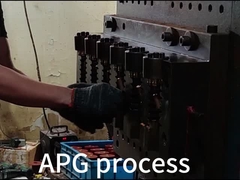
  • Process flexibility optimized for both APG injection (10-30 min gelation) and vacuum casting (3-6 hr cure).
  • Low curing shrinkage (0.7-0.9%) ensures dimensional stability in final products.
  • High moisture resistance with low water absorption (0.08-0.20%) from 23°C to 100°C.
  • Ideal for demanding electrical insulation applications in transformers, solid-pole bushings, and switchgear components.
  • Flame-resistant, rated HB (4mm) and V1 (12mm) under flammability tests.
FAQS:
  • What filler is recommended for the LE-9229 epoxy resin system?
    Use 400-mesh silica flour at 280-340 pbw to enhance mechanical strength and thermal conductivity.
  • Can the LE-9229 epoxy resin system withstand high-voltage environments?
    Yes, its dielectric strength (30 kV/mm) and volume resistivity (10¹⁵ Ω*cm) make it ideal for 10-35kV insulation.
  • How does APG differ from vacuum casting in this system?
    APG uses pressure (0.5-5 bar) for rapid production (10-30 min gelation), while vacuum casting eliminates bubbles for precision parts but requires longer curing (3-6 hrs).